Shooting with a Long Lens
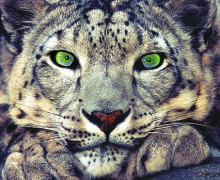
If you’ve ever dreamt of filming snow leopards or capturing an amazing lion kill, you may wonder what equipment you need to capture footage of distant animals? We’ll cover the camera, the tripod, and the lenses needed to start this type of story.
Of course, you want to get as close to the subject as possible. But in the interest of safety and not disturbing the subject, you also need a steady camera with a long lens to help get closer than you can be physically.
Cameras
Generally, the more expensive the camera, the better the lens will be able to zoom to far off distances. But even high-end cameras are built for different purposes. Most cameras are built to be generalist, allowing for everything from macro- to telephoto photography. If your goal as a filmmaker is to capture extreme telephoto shots, it’s important to find a camera that will allow you to change lenses.
Lenses
When considering lens quality, the key features are good glass that will allow the most light to come in and minimum to no distortion of the image. One of the best indicators of the quality of the lens is the f-value. Cheaper lenses will generally only allow enough light to get an f-value of f 1/5.6 or so. The larger the f-value the better prime lenses (lenses that don’t zoom) might get down to f 1/1.1. Telephoto lenses, by their very nature, are difficult to get a good, low, f-value. The best ones have giant optics, like the ones you’re likely to see the media use in the end-zone of a football game.
Aperture and F-Value
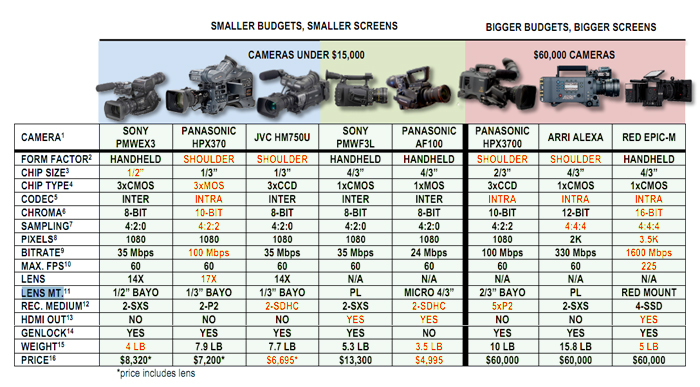
Lenses with large apertures are the best. The aperture relates to the amount of light you can let in. F22 (small aperture) is shorthand for f 1/22 (a small f-value). F1.2 (a large aperture) is shorthand for f 1/1.2 (a small f-value). Technically, the f-value indicates the size of the aperture. Sometimes people will simply say they have a lens with f4, f1.4, etc. They drop the fraction. (It may get confusing, and there is no easy way around it.)
We recommend buying at least one high-quality telephoto lens to get started. You can get by on the lower quality zoom lenses. As you progress, you’ll really notice the difference.
Tripods
The further you zoom the camera, the more a small shake in the camera is amplified. In fact, a light breeze, as subtle as it might seem, can wreck a shot. Thus, the quality of the tripod is extremely important. Unfortunately for would-be remote filmmakers, the best tripods for long-lens filmmaking are also extremely heavy. The heavier and more sturdy the tripod, the more stable the shot is going to be.
The minimum quality tripod that a wildlife filmmaker will need to purchase will cost about 500 USD. Very nice systems for higher-end cameras start around 2000 USD. This includes collapsible legs and a fluid head. The head, where the camera is mounted, is the most important piece. Quality fluid heads allow steady movement in panning shots across the horizon, perhaps following a soaring eagle in the sky or tracking a lion across the savanna. Make sure the legs are designed for field shoots; many are designed for studio shots, where the ground is always level.
For more information specifically about tripods, check out our gear guide or read reviews from B&H Photo.