Coral Reefs Biome
“Underwater Rainforests”
Coral Reefs have been called the rainforests of the ocean because of their rich biodiversity. Unfortunately they are also in becoming increasingly threatened. Not only is global warming going to affect the survival of coral reefs, but other human activities threaten the entire ecosystem.
What are Coral Reefs?
Let us start our definition of this biome by defining what corals are. Corals are small animals that belong to the phylum Cnidaria together with anemones, jellyfish and hydroids. All Cnidarians have stinging organs called cnidocysts. If you’ve ever been stung by a jellyfish you know the effects of these stinging organs.
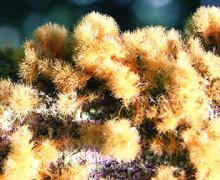
Corals are generally divided up into hard (scleratinian) corals and soft corals. It’s the hard corals that build the framework of the coral reefs. In the Indo-Pacific waters, approximately 500 species of hard corals are known. Soft corals, also called octocorralina, lack the hard calcium carbonate structure that hard corals build. Most have a fleshy structure with small silica spicules, like internal spines, that give them extra support. The majority of the corals are colonial with several thousand small individuals.
Where are Coral Reefs found?
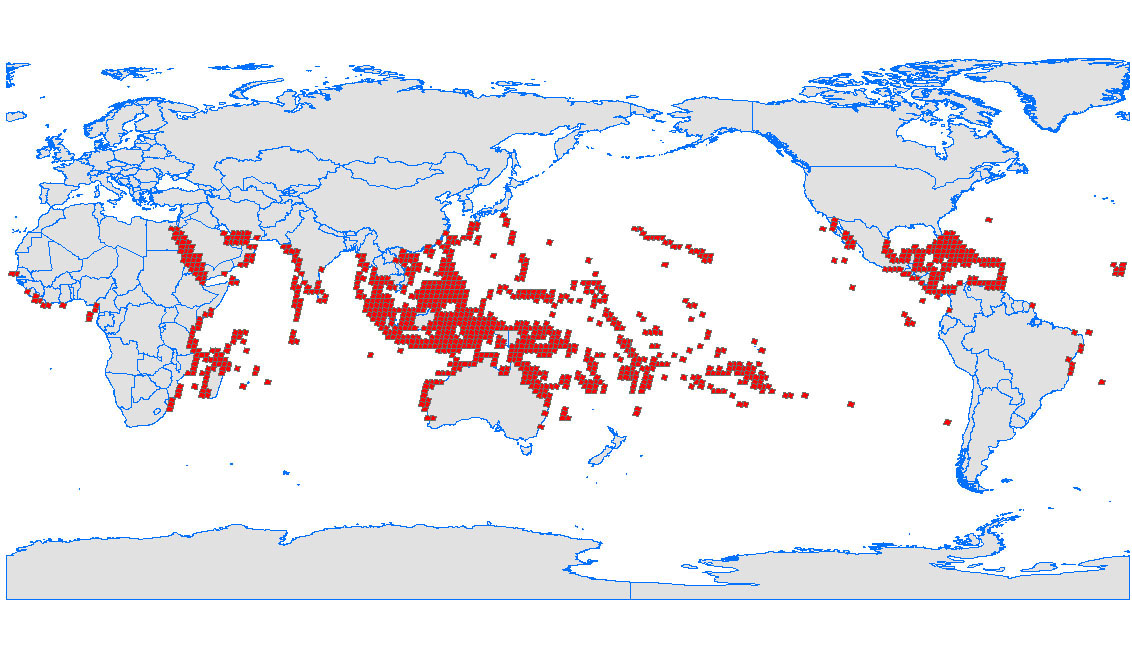
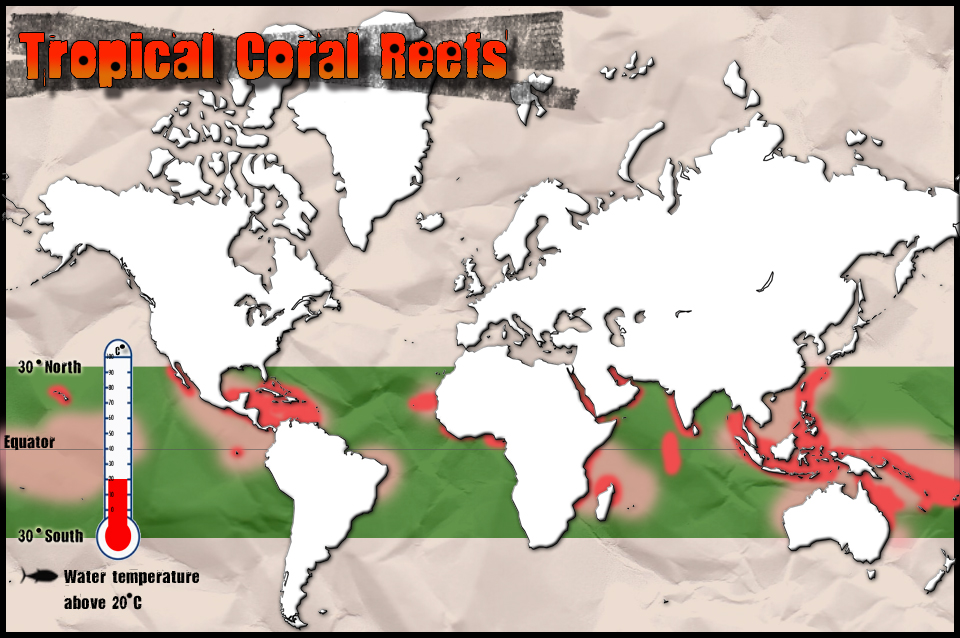
Coral Reefs are almost exclusively found in tropical and sub-tropical waters across the globe. Scientists have recently found coral reefs in temperate waters such as off the Atlantic coast of Norway, but in general when we talk about coral reefs we refer to the diverse tropical reefs that may hold several hundreds of species of hard reef-building corals alone. These reefs form the framework for an incredible diversity of other organisms.
The longest coral reef system on Earth is the Great Barrier Reef off the east coast of Australia. This massive reef system stretches more than 2,000 km and can be seen from space!
What do coral reefs need to live?
For most reef building corals to survive they need to have a few special requirements met. For example, at any time the average water temperature can not be less than about 18-20 degrees Celsius. For this reason, tropical coral reefs are generally found between 30 degrees north and 30 degrees south of the Equator.
Since there is no shortage of sunlight, nutrients soon become the limiting factor for primary producers. So the waters around tropical coral reefs are in fact relatively nutrient poor. Yet still, they support this incredible diversity of life. The answer to the energy equation is working together. Most corals have developed a symbiotic relationship with a small microalgae called a zooxanthellae. This small dinoflagellate is incorporated in the coral tissue and actually is what gives corals their beautiful colors. As other algae, the zooxanthellae use sunlight to photosynthesize and produce so much energy that it can also provide the coral with almost all of its energy needs (scientists have found that about 98 percent of the energy may be from the zooxanthellae). In return the algae can take up nutrient-rich waste products from the coral. Because of this symbiotic relationship corals can only grow relatively close to the surface where the water is clear enough for the zooxanthellae to perform photosynthesis.
The hard coral reef structure is made of calcium carbonate that the coral secretes as it grows and expands the colony.
Animals on a Coral Reef:
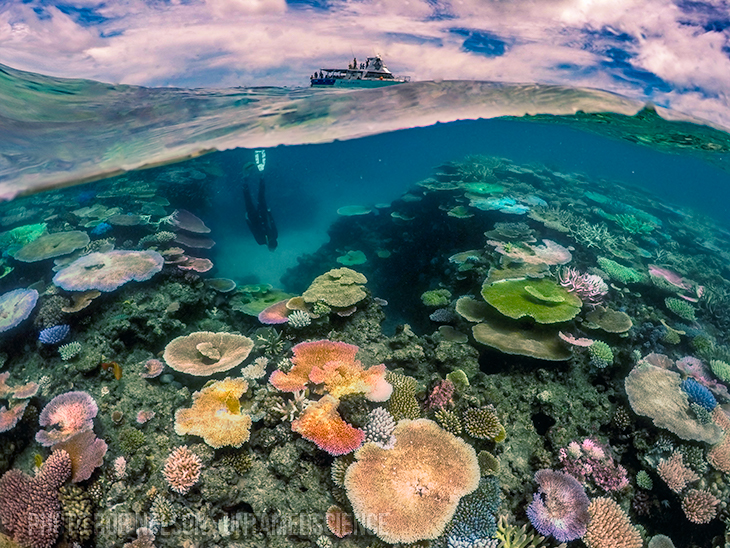
It would be impossible to list here all the animals that live on a coral reef. There are simply too many. Some of the groups of animals frequently seen on the reefs include Sea Fans (type of soft coral), Sharks, Butterfly fish, Nudibranchs, Sea stars, Cuttlefish, and Clownfish. But also even some reptiles such as turtles and sea snakes. All in all there are thousands of animals that make the coral reefs their home.
Threats to Coral Reefs
Coral reefs are being threatened around the world because of many different factors. Their special requirements to survive also make them relatively sensitive to change. We know that most ecosystems are able to adjust to changes fairly well, given enough time. The problem today is that changes are happening so fast that most animals don’t have time to keep up. And coral reefs especially.
Many coral reefs are relatively close to land. This makes them easy to access and also easily affected by everything that goes on on land. Road construction, coastal clearing, agriculture, and more result in a lot of sediment and pollutants that get washed out to sea with the monsoon rains that fall in tropical areas. Simple sedimentation in the water may be enough to kill the reefs both by directly covering the corals but also by decreasing light penetration of the water so much that the symbiotic zooxanthellae algae are unable to photosynthesize.
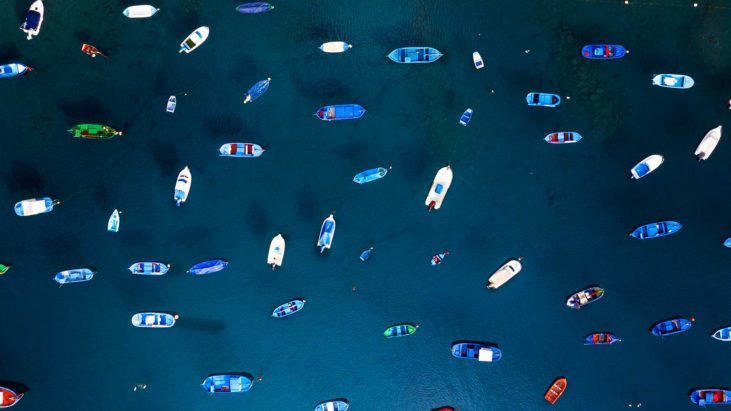
Another factor is over-fishing. When too many fish are taken out of a system the balance is disturbed. Many of these fish eat algae and control the abundance of algae on the reef. When the fish is removed, the fast-growing algae can take over. Destructive fishing methods such as cyanide and dynamite used in some parts of the world also directly affect the structure of the coral reefs. A coral reef that has been blown away by dynamite needs many, many years to recover.
Global warming is also causing the sea temperatures to rise. Even though corals need relatively warm water to survive, there is a limit. When the water gets too warm, it affects the corals and the zooxanthellae algae negatively. The algae disappears from the coral and the corals become “bleached”. This basically means that the coral structure is left naked but still alive without the symbiotic algae. Most corals can only survive a short period without the symbiotic algae. If water conditions don’t change back to normal during this time also, the coral will die.
One more thing… directly breaking of a branch of a coral could mean removing more than 10 years of construction. Don’t encourage breaking the corals for souvenirs. Leave them in the water to look at. Don’t encourage people who sell the corals to continue. In other words, don’t break or buy corals, please.
What can you do to help?
The only way to protect these amazing environments is to provide an incentive for people to protect them. Ecotourism is one reason to save these reefs. Visit a coral reef, and learn as much as you can about it. Talk to the locals, and tell them how important a healthy reef is to your visit. If you want to do more, visit noaa.org.
Links to more information on Coral Reefs
Check out and play around with a Global Information System (GIS) database for coral reefs. ReefBase GIS maps provide all the layers to visualize how different types of coral reefs are distributed around the world.
Also visit ReefBase homepage for a lot of the latest information and status reports concerning the coral reefs.
Related Topics

“Underwater Rainforests”
Coral Reefs have been called the rainforests of the ocean because of their rich biodiversity. Unfortunately they are also in becoming increasingly threatened. Not only is global warming going to affect the survival of coral reefs, but other human activities threaten the entire ecosystem.
What are Coral Reefs?
Let us start our definition of this biome by defining what corals are. Corals are small animals that belong to the phylum Cnidaria together with anemones, jellyfish and hydroids. All Cnidarians have stinging organs called cnidocysts. If you’ve ever been stung by a jellyfish you know the effects of these stinging organs.
Corals are generally divided up into hard (scleratinian) corals and soft corals. It’s the hard corals that build the framework of the coral reefs. In the Indo-Pacific waters, approximately 500 species of hard corals are known. Soft corals, also called octocorralina, lack the hard calcium carbonate structure that hard corals build. Most have a fleshy structure with small silica spicules, like internal spines, that give them extra support. The majority of the corals are colonial with several thousand small individuals.
Where are Coral Reefs found?
Coral Reefs are almost exclusively found in tropical and sub-tropical waters across the globe. Scientists have recently found coral reefs in temperate waters such as off the Atlantic coast of Norway, but in general when we talk about coral reefs we refer to the diverse tropical reefs that may hold several hundreds of species of hard reef-building corals alone. These reefs form the framework for an incredible diversity of other organisms.
The longest coral reef system on Earth is the Great Barrier Reef off the east coast of Australia. This massive reef system stretches more than 2,000 km and can be seen from space!
What do coral reefs need to live?
For most reef building corals to survive they need to have a few special requirements met. For example, at any time the average water temperature can not be less than about 18-20 degrees Celsius. For this reason, tropical coral reefs are generally found between 30 degrees north and 30 degrees south of the Equator.
Since there is no shortage of sunlight, nutrients soon become the limiting factor for primary producers. So the waters around tropical coral reefs are in fact relatively nutrient poor. Yet still, they support this incredible diversity of life. The answer to the energy equation is working together. Most corals have developed a symbiotic relationship with a small microalgae called a zooxanthellae. This small dinoflagellate is incorporated in the coral tissue and actually is what gives corals their beautiful colors. As other algae, the zooxanthellae use sunlight to photosynthesize and produce so much energy that it can also provide the coral with almost all of its energy needs (scientists have found that about 98 percent of the energy may be from the zooxanthellae). In return the algae can take up nutrient-rich waste products from the coral. Because of this symbiotic relationship corals can only grow relatively close to the surface where the water is clear enough for the zooxanthellae to perform photosynthesis.
The hard coral reef structure is made of calcium carbonate that the coral secretes as it grows and expands the colony.
Animals on a Coral Reef:
It would be impossible to list here all the animals that live on a coral reef. There are simply too many. Some of the groups of animals frequently seen on the reefs include Sea Fans (type of soft coral), Sharks, Butterfly fish, Nudibranchs, Sea stars, Cuttlefish, and Clownfish. But also even some reptiles such as turtles and sea snakes. All in all there are thousands of animals that make the coral reefs their home.
Threats to Coral Reefs
Coral reefs are being threatened around the world because of many different factors. Their special requirements to survive also make them relatively sensitive to change. We know that most ecosystems are able to adjust to changes fairly well, given enough time. The problem today is that changes are happening so fast that most animals don’t have time to keep up. And coral reefs especially.
Many coral reefs are relatively close to land. This makes them easy to access and also easily affected by everything that goes on on land. Road construction, coastal clearing, agriculture, and more result in a lot of sediment and pollutants that get washed out to sea with the monsoon rains that fall in tropical areas. Simple sedimentation in the water may be enough to kill the reefs both by directly covering the corals but also by decreasing light penetration of the water so much that the symbiotic zooxanthellae algae are unable to photosynthesize.
Another factor is over-fishing. When too many fish are taken out of a system the balance is disturbed. Many of these fish eat algae and control the abundance of algae on the reef. When the fish is removed, the fast-growing algae can take over. Destructive fishing methods such as cyanide and dynamite used in some parts of the world also directly affect the structure of the coral reefs. A coral reef that has been blown away by dynamite needs many, many years to recover.
Global warming is also causing the sea temperatures to rise. Even though corals need relatively warm water to survive, there is a limit. When the water gets too warm, it affects the corals and the zooxanthellae algae negatively. The algae disappears from the coral and the corals become “bleached”. This basically means that the coral structure is left naked but still alive without the symbiotic algae. Most corals can only survive a short period without the symbiotic algae. If water conditions don’t change back to normal during this time also, the coral will die.
One more thing… directly breaking of a branch of a coral could mean removing more than 10 years of construction. Don’t encourage breaking the corals for souvenirs. Leave them in the water to look at. Don’t encourage people who sell the corals to continue. In other words, don’t break or buy corals, please.
What can you do to help?
The only way to protect these amazing environments is to provide an incentive for people to protect them. Ecotourism is one reason to save these reefs. Visit a coral reef, and learn as much as you can about it. Talk to the locals, and tell them how important a healthy reef is to your visit. If you want to do more, visit noaa.org.
Links to more information on Coral Reefs
Check out and play around with a Global Information System (GIS) database for coral reefs. ReefBase GIS maps provide all the layers to visualize how different types of coral reefs are distributed around the world.
Also visit ReefBase homepage for a lot of the latest information and status reports concerning the coral reefs.