Genetics
Did you know that within every single cell of your body, you store the blueprints to create an entirely new you—from scratch? Those blueprints, called DNA, dictate everything about how to build our bodies, from how to make our toenails to how to wire our brains. The way we’re put together affects who we are and how we function and interact with the environment. Pretty impressive, huh?
The study of DNA and genes is known as genetics. It’s one of the most recent fields of science to pop up on the map, starting around 200 years ago. Every day, there are legions of scientists around the world scurrying to learn more about genetics. It’s one of the fastest-moving areas of modern science.
What are genes and how do they make you?
Genes are the basic element that geneticists look at when studying organisms. A gene is simply a piece of DNA that codes for a trait (also called a phenotype, or a phenotypic trait), which is some observable characteristic. Traits range from simple things, like hair and eye color, to the more complex, like intelligence or susceptibility to disease.
There can be many different types of genes that code for the same trait, or even one gene that affects many traits. That’s what makes us so variable! For example, the MC1R gene helps dictate coloration in your skin, hair, and the iris within your eyes. There are many different variations of this one gene, called alleles. Depending on what types of alleles you have in your DNA, you could end up with one of any number of skin color, hair color, eye color, or even freckles!
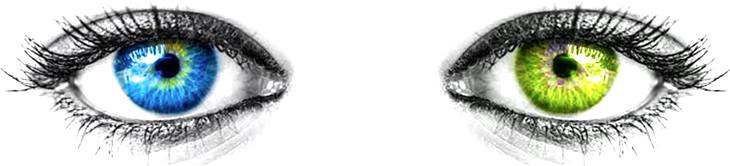
Yes, you read that right: you have more than one allele for each gene. You have two alleles for each gene, in fact—one from each biological parent. Depending on what types of alleles they pass on to you, you could end up with two copies of the same allele or two copies of different alleles.
Having two alleles creates some interesting effects. Generally, your body will read both copies of the alleles and try to create you based on both blueprints. If your two sets of blueprints code for the same thing (known as being homozygous, or possessing two copies of the same allele), then there’s no problem: your body is on the same page with itself.
But, if your two sets of blueprints code for different variations of a trait (known as being heterozygous, or possessing two copies of different alleles), then some interesting mash-ups can happen. Sometimes one allele will take charge and become the dominant allele, and suppress the other, recessive allele, so that you wouldn’t even know you had it unless you tracked it down. Other times, they’ll both be expressed equally to different degrees.
These examples where one gene controls one trait are indicative of Mendelian, or simple, inheritance. It’s often not that easy: sometimes one gene is involved in creating many different traits, or one trait may be controlled by several different genes. It can get really complex!
How do scientists study genetics?
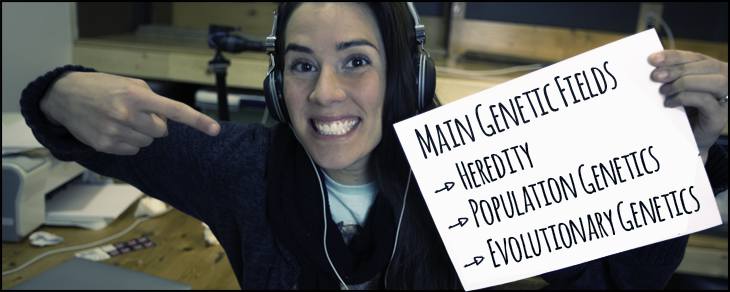
There are more specific elements that a scientist can study involving genes. Here are just a few sub-fields branching from the main field of genetics:
Heredity
Heredity is simply the study of how traits are inherited between generations. We’ve already discussed how heredity works, but it gets even more complicated, and that’s where scientists really dig in. In particular, scientists want to know how traits are passed along so we can understand our own biology better, or predict what might happen if two people have children.
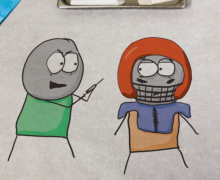
The field of heredity started with Gregor Mendel back in the 1800s. He started a series of experiments involving peas that launched the whole field of genetics. It’s come a long way since then; here’s what it was like for him back in the day:
Population Genetics
A population geneticist looks at all the genes and alleles in a population as a whole. They’re interested in how the gene pool affects the population. They might look at how well different alleles contribute to the success (or failure) of a population, or track genetic influences in a population from a long-distant ancestor, for example.
A famous case of population genetics at work is with the blood disease known as sickle-cell anemia, where different alleles can cause red blood cells to become shaped like a crescent (or sickle). Scientists have figured out that having two copies of the sickle-cell allele (a.k.a., being homozygous) means that someone will have the disease.
However, if a person only has one of the sickle-cell alleles and a normal allele, they won’t get the diseases, but instead, they’ll be more resistant to malaria! As a result, population geneticists have noted that the sickle-cell allele tends to be very common in malaria-prone areas because having just one copy of the allele in this location makes a person more fit, or likely to survive and have children.
Evolutionary Genetics
Evolutionary geneticists also focus on genes and alleles within populations, much like population geneticists. However, evolutionary geneticists focus more on how the different genes and alleles within a population change over time. This process is actually what happens when a population evolves, hence the name evolutionary genetics.
Darwin’s finches are the most famous example of how genes cause a population to change over time. As one type of ancestral finch made its way to the Galapagos islands and began breeding and spreading out, different alleles started showing up in the population that changed the shape and behavior of the birds. Suddenly, some birds had long beaks that were good for one type of food, and some birds had short beaks better for other types.
The Untamed Science crew caught up with another fascinating example of island finch evolution in this awesome video:
Related Topics

Did you know that within every single cell of your body, you store the blueprints to create an entirely new you—from scratch? Those blueprints, called DNA, dictate everything about how to build our bodies, from how to make our toenails to how to wire our brains. The way we’re put together affects who we are and how we function and interact with the environment. Pretty impressive, huh?
The study of DNA and genes is known as genetics. It’s one of the most recent fields of science to pop up on the map, starting around 200 years ago. Every day, there are legions of scientists around the world scurrying to learn more about genetics. It’s one of the fastest-moving areas of modern science.
What are genes and how do they make you?
Genes are the basic element that geneticists look at when studying organisms. A gene is simply a piece of DNA that codes for a trait (also called a phenotype, or a phenotypic trait), which is some observable characteristic. Traits range from simple things, like hair and eye color, to the more complex, like intelligence or susceptibility to disease.
There can be many different types of genes that code for the same trait, or even one gene that affects many traits. That’s what makes us so variable! For example, the MC1R gene helps dictate coloration in your skin, hair, and the iris within your eyes. There are many different variations of this one gene, called alleles. Depending on what types of alleles you have in your DNA, you could end up with one of any number of skin color, hair color, eye color, or even freckles!
Yes, you read that right: you have more than one allele for each gene. You have two alleles for each gene, in fact—one from each biological parent. Depending on what types of alleles they pass on to you, you could end up with two copies of the same allele or two copies of different alleles.
Having two alleles creates some interesting effects. Generally, your body will read both copies of the alleles and try to create you based on both blueprints. If your two sets of blueprints code for the same thing (known as being homozygous, or possessing two copies of the same allele), then there’s no problem: your body is on the same page with itself.
But, if your two sets of blueprints code for different variations of a trait (known as being heterozygous, or possessing two copies of different alleles), then some interesting mash-ups can happen. Sometimes one allele will take charge and become the dominant allele, and suppress the other, recessive allele, so that you wouldn’t even know you had it unless you tracked it down. Other times, they’ll both be expressed equally to different degrees.
These examples where one gene controls one trait are indicative of Mendelian, or simple, inheritance. It’s often not that easy: sometimes one gene is involved in creating many different traits, or one trait may be controlled by several different genes. It can get really complex!
How do scientists study genetics?
There are more specific elements that a scientist can study involving genes. Here are just a few sub-fields branching from the main field of genetics:
Heredity
Heredity is simply the study of how traits are inherited between generations. We’ve already discussed how heredity works, but it gets even more complicated, and that’s where scientists really dig in. In particular, scientists want to know how traits are passed along so we can understand our own biology better, or predict what might happen if two people have children.
The field of heredity started with Gregor Mendel back in the 1800s. He started a series of experiments involving peas that launched the whole field of genetics. It’s come a long way since then; here’s what it was like for him back in the day:
Population Genetics
A population geneticist looks at all the genes and alleles in a population as a whole. They’re interested in how the gene pool affects the population. They might look at how well different alleles contribute to the success (or failure) of a population, or track genetic influences in a population from a long-distant ancestor, for example.
A famous case of population genetics at work is with the blood disease known as sickle-cell anemia, where different alleles can cause red blood cells to become shaped like a crescent (or sickle). Scientists have figured out that having two copies of the sickle-cell allele (a.k.a., being homozygous) means that someone will have the disease.
However, if a person only has one of the sickle-cell alleles and a normal allele, they won’t get the diseases, but instead, they’ll be more resistant to malaria! As a result, population geneticists have noted that the sickle-cell allele tends to be very common in malaria-prone areas because having just one copy of the allele in this location makes a person more fit, or likely to survive and have children.
Evolutionary Genetics
Evolutionary geneticists also focus on genes and alleles within populations, much like population geneticists. However, evolutionary geneticists focus more on how the different genes and alleles within a population change over time. This process is actually what happens when a population evolves, hence the name evolutionary genetics.
Darwin’s finches are the most famous example of how genes cause a population to change over time. As one type of ancestral finch made its way to the Galapagos islands and began breeding and spreading out, different alleles started showing up in the population that changed the shape and behavior of the birds. Suddenly, some birds had long beaks that were good for one type of food, and some birds had short beaks better for other types.
The Untamed Science crew caught up with another fascinating example of island finch evolution in this awesome video: