Chordates are a phylum in the animal kingdom that include the vertebrates and the few closely related invertebrates that have, at least for a short period of their life, a notochord, a hollow nerve chord, pharyngeal slits, an endostyle and a post-anal tail.

The notochord is flexible and rod-shapped. It's found in all chordates, although for some it's only found in the embryos. The notochord is found ventrally (towards the top) of the neural tube.
A neural tube is found in all chordates. In vertebrates this becomes the spinal cord and brain.
Phyngeal slits are filter-feeding organs found in the non-vetebrate chordates. Vertebrates have pharyngeal slits as embryos. Humans for instance have gill-like slits in the neck as embryos.
The endostyle is a longitudinal ciliated groove on the ventral surface of the pharynx that produces mucus to gather food particles. Like the phyarngeal slits, the endostyle has taken different forms in the different taxa. It is found in the urochordates and cephalochordates, and even larval lampreys. In vertebrates it is considered homologous to the thyroid gland (although this is debated).

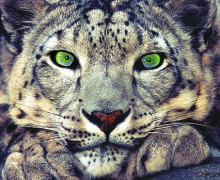

Basically, chordates have a muscular tail that extends back, past the anus. In humans, for instance, we have a tailbone and have lost the tail. Yet, this is still considered characteristic of all chordates.
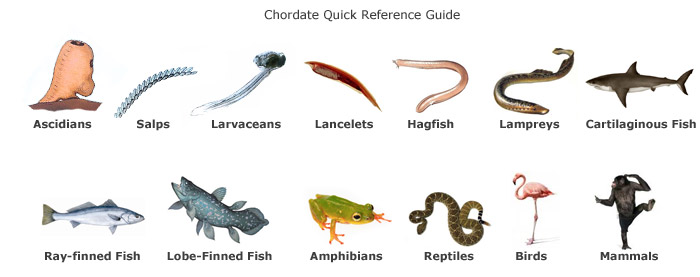
The following living classes exist in the phylum Chordata (referencing www.catalogueoflife.org 2011):
The following diagram is a tree showing the relative relationships of different well known chordates.